

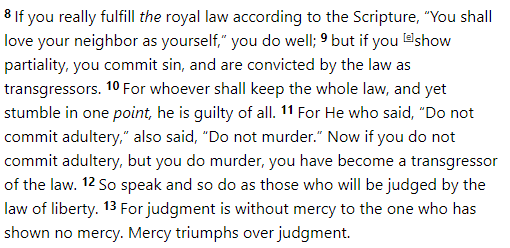
Evil is a consequence of mankind’s choice to rebel against God. While the Garden of Eden was Paradise, Adam and Eve chose to pursue being like a god (apotheosis) by choosing to consume from the tree of the knowledge between good and evil. This resulted in Adam and Eve choosing to reject divinization through grace (theosis), as theosis can not occur through an act of rebellion against God. This resulted in Adam and Eve’s expulsion from paradise, death, and the existence of evil. God only created that which is good. But He will not violate mankind’s free will. Mankind has the choice to obey God or rebel against Him, each of which has positive or negative consequences, with Judgement separating those who rebel against God (goats) from those who follow God’s royal law (sheep) (James 2:8, Matthew 25).
Why Evil Exists
Non-believers who deny or do not understand God often wonder how God could exist despite the presence of evil and “bad things happening to good people.” However, this state of the world is expected if one understands Creation, The Fall, and Christ. God did not create evil, for “everything was created very good - which means that evil did not appear together with the creation of the world (Pomazansky, p. 43).” Evil is a consequence of mankind’s free will. Mortality, sickness, pain, suffering, thirst, and hunger are examples of conditions that exist solely as a result of Adam and Eve choosing to sin while in Paradise. This decision led to mankind's expulsion from Paradise and The Evil One ruling earth (1 John 5:19). Christ became a ladder by which mankind can return to Paradise, as Christ offers forgiveness of sin and eternal life. While the narrow path to salvation guarantees suffering, torment, and physical death, those who follow the royal law of love will receive eternal life while those who reject God will we separated from the tree of life.
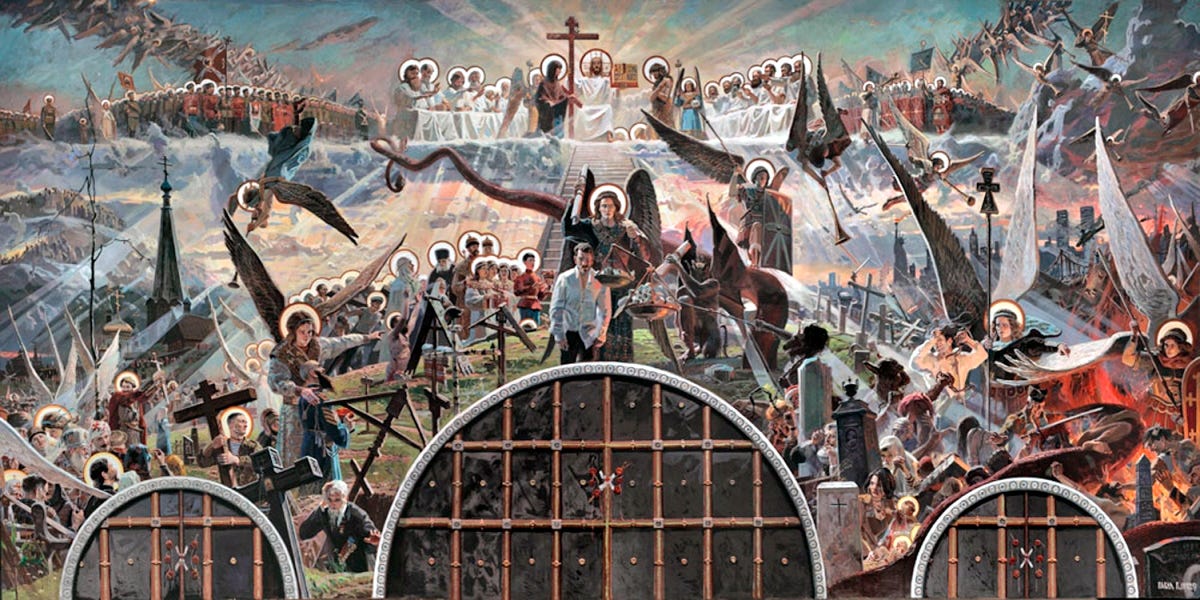
Consequences of The Fall
The Garden of Eden was Paradise and everything that God created was “very good (Gen. 1:31),” and therefore “nothing He made is...evil itself (OSB, p. 5).” The tree of life and the tree of the knowledge of good and evil were both placed in the middle of the Garden that God created. God instructed Adam (Eve had yet to be created) to not eat from the tree of the knowledge of good and evil, “for whatever day you eat from it, you shall die by death (Gen. 2:17).” God, therefore, gave Adam a place in Paradise and a law to obey, meaning Adam’s place in Paradise was conditional upon obedience to this commandment.
When God created a wife for Adam, marriage between Adam and Eve was defined as the husband and wife becoming “one flesh (Gen. 2:25).” Adam and Eve partook of the tree of the knowledge of good and evil after the serpent told Eve that she would become like a god (apotheosis) if she ate from the tree. Eve then ate the forbidden fruit and then gave the fruit to Adam, who did the same. They both immediately sought to cover their naked bodies, which they previously were not concerned about covering. When God saw this, He immediately asked if they ate from the forbidden tree. Instead of apologizing and repenting, Eve blamed the serpent while Adam blamed Eve (demonstrating Adam no longer viewed his marriage to Eve as two bodies as one flesh). God then curses the serpent and outlines the conditions mankind will experience outside of Paradise:
Painful childbirth (Gen. 3:16)
Cursed ground (Gen. 3:17)
Sweat, toil, and physical pain (Gen. 3:17)
Hunger, thirst, and a need to labor to meet those needs (Gen. 3:17)
New bodies which experience the above conditions (Gen. 3:21)
Expulsion from Paradise (Gen. 3:24)
Mankind being born outside of Paradise (Gen. 3:24)
Death (Gen. 2:17)
While God outlines the many negative consequences of The Fall, He also foretells of mankind's redemption by Christ, as God puts enmity between the seed of the serpent and the woman and states that the serpent’s head will be crushed (which Christ did by defeating death). And while Adam and Eve did not suffer immediate physical death after eating the forbidden fruit, they suffered spiritual death. This state of spiritual death is the battle humanity fights today, as we have been born outside of Paradise. We live in a world where evil and sin exist, in stark contrast with how Adam and Eve were born in Paradise (which did not have sin, evil, or death). Rebellion against God’s will caused Adam and Eve to descend from Paradise and inhabit a world whose ground was cursed (Gen. 3:17).
Christ the Redeemer and Judge
Christ sought to liberate mankind from the curse of the law (Gal. 3:10-14), which is rooted in Adam’s sin against God’s law which resulted in physical death and led to a world in which evil impacted the physical and spiritual aspects of man (“fallen world”). Each time mankind disobeys God, they fall further away from Paradise. Each choice to sin pushes mankind further away from the gates of the Kingdom. Christ explains why evil exists and why good things happen to bad people: if the world hated and persecuted Christ (God incarnate), then the world will hate all those who keep God’s word and commandments (John 15:18-25). Additionally, “the world lies under the sway of the wicked one (1 John 5:19),” which means that those who follow the one commandment of love and the teachings of Christ will, like Christ, face persecution, slander, and physical death (Matt. 16:25). And to follow Christ, mankind must take up their own cross daily (Luke 9:23, Matt. 10:37), for “the burden in this world is different for each person, for each has been chosen by God to bear certain struggles for his own salvation and the salvation of those around him (OSB, p. 1383).” Christ told the Apostles that He would “suffer many things and be rejected by the elders and the chief priests and scribes, and be killed, and be raised the third day (Luke 9:21),” demonstrating that even God, as Christ, had to suffer the effects of evil while on earth, even though Christ was sinless. And if God is not exempt from suffering and the impact of mankind’s choice to do evil, then humanity should likewise expect to suffer while on earth. Christ decreed the one law of love, which is the standard by which mankind will be judged when Christ returns. And “just as not all holy people are equally righteous and virtuous, so the blessed state of souls in heaven will have various degrees,” and “every man shall receive his own reward according to his own labor. The degree of blessedness will correspond to the degree of the deeds-what we shall sow on earth, that we shall reap in heaven (Archimandrite Panteleimon, p. 10).”
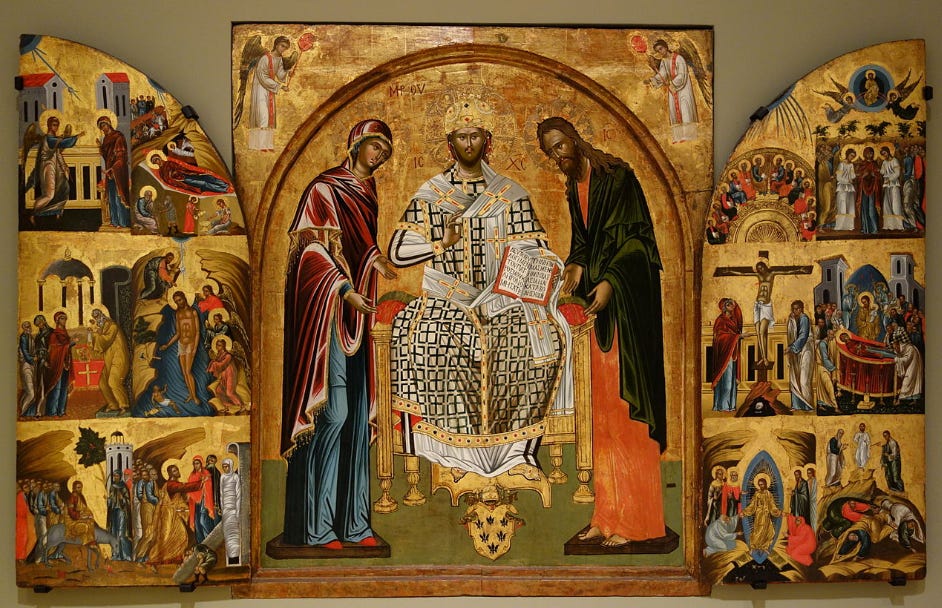
Thus, the earth is best described as a spiritual arena. Mankind is given free will but each thought, feeling, and action has spiritual consequences. These consequences can have physical manifestations (such as an injury or illness). The only two ultimate outcomes of human existence are eternal life (the tree of life) and eternal death (the knowledge between good and evil). Adam and Eve chose to be like gods instead of being obedient to God. Their choice was rooted in pride, as Adam and Eve believed they could obtain knowledge to be like a god (apotheosis) by disobeying God and, therefore, could obtain a godlike state without God. The purpose of human life, according to The Orthodox Church, is theosis, (divinization by grace), which is not possible if you disobey God. Adam and Eve chose apotheosis to be like a god, thereby rejecting divinization by grace.
Christ, as God incarnate, sought to help mankind return to Paradise by fulfilling the promise God made to humanity in the Garden of Eve: that the serpent, which brought death into the world, would be crushed on its head. Christ’s resurrection was that which crushed the serpent's head. But this liberation from death required Christ to suffer and experience physical death. This means mankind, in order to follow Christ, will likewise suffer and experience physical death. While evil in this world continues so long as people choose to do evil, Christ, as the Judge, will uphold enmity between the seeds (Gen. 3:15). The sheep, which are of God, will ascend to the Kingdom and eternal life. The goats are “the seed of the serpent” because “they reject Christ and follow the Devil (OSB, p. 8),” and will “go away into everlasting punishment (Matthew 23:46).” Evil is therefore a condition or aspect that exists in the world outside of Paradise, which is the fallen state earth has been in since Adam and Eve were expelled from the Garden. This has separated mankind from the presence of God, making Christ the closest mankind has been to God, in a physical sense, since the fall. His Church becomes a place where we can interact with God, by and through Christ.
While the existence of evil or the suffering of good people may be used as a justification by pagans, atheists, and agonistics to deny the existence of God, evil only exists because mankind willed it into existence. Adam and Eve chose to do their will to obtain something less perfect than what God offered, as they wanted to be like a god by acquiring knowledge and, as a result, rejected divinization by grace. Adam and Eve, like Cain and many other humans, failed to repent. However, this arrogance did not cause God to reject humanity. Instead, God descended as Christ and created a new covenant, based on the forgiveness of sins and love, that would allow mankind to reclaim their place in Paradise.
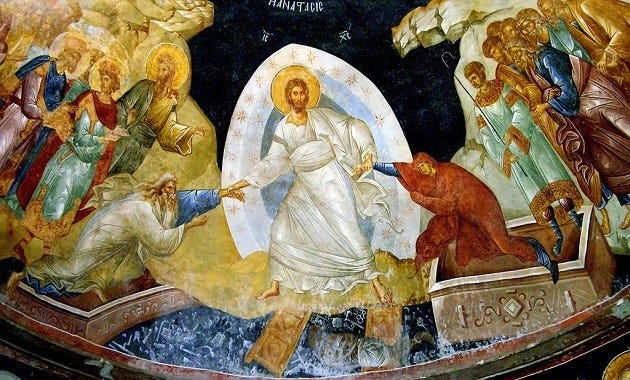
Humans must now work to return to Paradise by living in a world that is in a fallen state. This fallen state allows humanity to experience evil, as evil exists because Adam and Eve obtained the knowledge of good and evil and chose to do evil (sin, which is the absence of love). This knowledge of evil then made evil actions and behaviors known to mankind, which then allowed mankind to choose to do acts that were either good or evil. Divinization of man can only occur through faith in and obedience to God. Since God respects humanity's free will, the earth is a spiritual arena where humans are impacted not only by their individual choices to obey or disobey God, but also by the choices of others. Experiencing evil allows humans to develop empathy and, more importantly, understand the consequences of the choice to do evil. While someone may have never read the Bible, they still experience the consequences of The Fall, such as hunger, illness, and pain. God, as Christ, likewise had to experience evil while living on earth but outside of Paradise. And if Christ had to struggle and suffer despite being sinless, then nobody on earth can escape suffering. The fear of suffering and death are both necessary to conquer in order to be free from spiritual death. Christ chose to have faith in God, even when tormented by suffering and physical death, and resurrected. The resurrection symbolizes mankind's potential to liberate the soul from the curse of the law and death itself, so long as man chooses love and faith of God above all else.
References:
Archimandrite Panteleimon Nizhnik. (1996). A Ray of Light. Printshop of St Job of Pochaev.
St. Athanasius Orthodox Academy. (2008). The Orthodox Study Bible. Thomas Nelson.
Pomazansky, M., & Rose, S. (2005). Orthodox Dogmatic Theology : a concise exposition. Saint Herman Of Alaska Brotherhood